 USD $
USD $ EUR €
EUR € HKD HK$


IoT Industry at a Critical Turning Point: From Mass Connectivity to Deep Intelligence
IoT Industry development has entered a decisive phase. After more than a decade of rapid expansion, the focus of the IoT Industry is no longer on how many devices can be connected, but on how deeply systems can understand, predict, and optimize real-world operations. As connectivity becomes standardized, intelligence is emerging as the new source of long-term value.

Today, the IoT Industry is undergoing a structural transition. This shift marks a move from mass connectivity toward deep intelligence, where data is transformed into actionable insight and automated decisions. As a result, the competitive logic of the IoT Industry is being fundamentally reshaped.
From Mass Connectivity to Meaningful Understanding
In its early stages, the IoT Industry was driven by scale. Metrics such as device count, network coverage, and connection cost defined success. Technologies like NB-IoT and LTE Cat.1 enabled low-power, low-cost connectivity at massive scale. Consequently, industries such as utilities, logistics, transportation, and manufacturing achieved basic digital visibility.
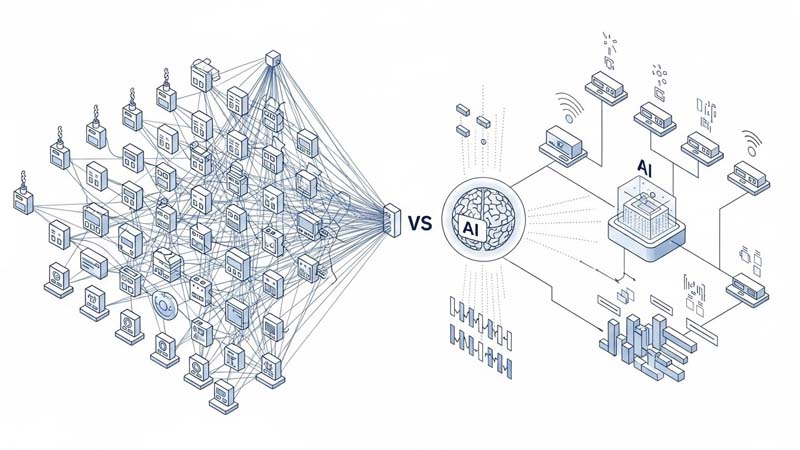
However, as connectivity reached maturity, its marginal value declined. Although data volume increased, business insight did not always follow. Systems could report what happened, yet they struggled to explain why it happened or what would happen next. Therefore, the IoT Industry began to reorient toward deeper intelligence.
Achievements and Structural Limits of the Connectivity Era
The mass connectivity era delivered undeniable benefits. Automated data collection reduced manual labor. Remote monitoring improved operational transparency. As a result, many industries achieved their first step toward digital transformation.
Nevertheless, structural limitations became increasingly clear. First, data value density remained low, since raw data lacked contextual interpretation. Second, systems were often fragmented, separating devices, platforms, and business processes. Third, revenue models depended heavily on hardware sales and connectivity fees, which limited scalability. As these challenges accumulated, the IoT Industry faced the need for a new growth engine.
Why Deep Intelligence Is Now Essential
Meanwhile, technological and market forces converged. Artificial intelligence, edge computing, and cloud platforms matured rapidly. AI moved beyond centralized analytics and began operating closer to devices and business processes. At the same time, customer expectations evolved.
Instead of simply monitoring assets, organizations now demand prediction, optimization, and automation. Therefore, the IoT Industry is shifting from passive data collection to active decision support. Deep intelligence allows systems to learn patterns, anticipate risks, and recommend actions in real time.
Defining Deep Intelligence in the IoT Industry
Deep intelligence does not mean complexity for its own sake. Rather, it enables IoT systems to understand context and purpose. Data is no longer treated as isolated signals but as meaningful inputs within a business model.
In this stage, the IoT Industry evolves from a sensing layer into a decision-making layer. Devices act as perception units, platforms serve as cognitive centers, and algorithms enable proactive responses. As a result, intelligence becomes embedded into daily operations rather than added as an external tool.
A Fundamental Restructuring of Industry Value
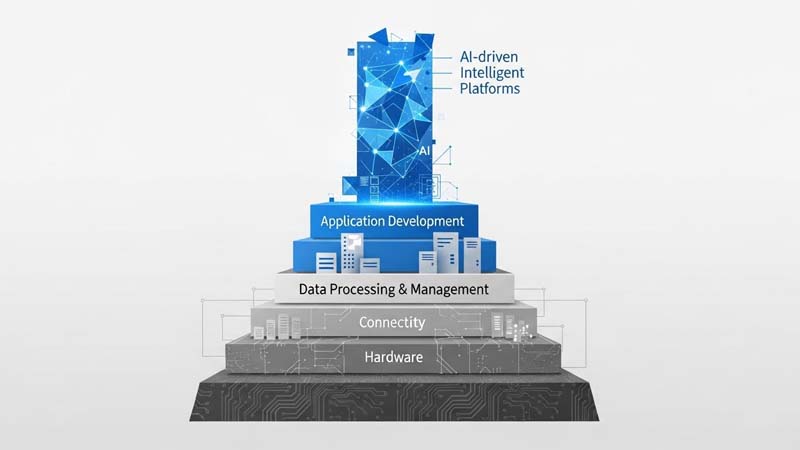
As the IoT Industry advances toward deep intelligence, its value chain is being restructured. Hardware is becoming increasingly standardized, while differentiation shifts upward to software, algorithms, and industry expertise.
Consequently, companies are transforming from device suppliers into intelligent solution providers.
In addition, ecosystem collaboration is becoming critical. Deep intelligent systems require cooperation across hardware, connectivity, platforms, and industry services. Therefore, competition within the IoT Industry is moving from individual products to integrated solution capabilities.
Practical Value Creation Through Deep Intelligence
In real-world deployments, deep intelligence is already delivering measurable outcomes. Predictive maintenance reduces downtime by identifying risks early. Adaptive control optimizes energy use under changing conditions. Moreover, system-level intelligence enables coordinated behavior across multiple devices and subsystems.
As a result, the IoT Industry is no longer defined by digital visibility alone. Instead, it is becoming an invisible but intelligent infrastructure that continuously optimizes operations behind the scenes.
Challenges on the Path to Intelligence
Despite its promise, the transition to deep intelligence presents challenges. Data quality remains a key concern. Industry knowledge is often difficult to formalize. In addition, security, reliability, and explainability are becoming more important as systems gain autonomy.
However, one conclusion is clear. Organizations that successfully integrate intelligence into IoT systems will gain sustainable competitive advantages. Therefore, deep intelligence is not optional but essential for long-term success in the IoT Industry.
The Future Direction of the IoT Industry
Looking ahead, the IoT Industry will emphasize vertical specialization and long-term value creation. Generic connectivity platforms will gradually give way to industry-specific intelligent solutions. As intelligence becomes embedded, IoT will fade into the background while its impact continues to grow.
Ultimately, the IoT Industry is transitioning from a technology-driven phase to a value-driven phase. Intelligence, not connectivity, will define leadership.
Intelligence as the Natural Evolution of Connectivity
The shift from mass connectivity to deep intelligence represents an inevitable evolution of the IoT Industry. This transformation is not merely technical but strategic. Mature IoT systems will no longer draw attention to themselves. Instead, they will quietly enable better decisions, lower risk, and higher efficiency.
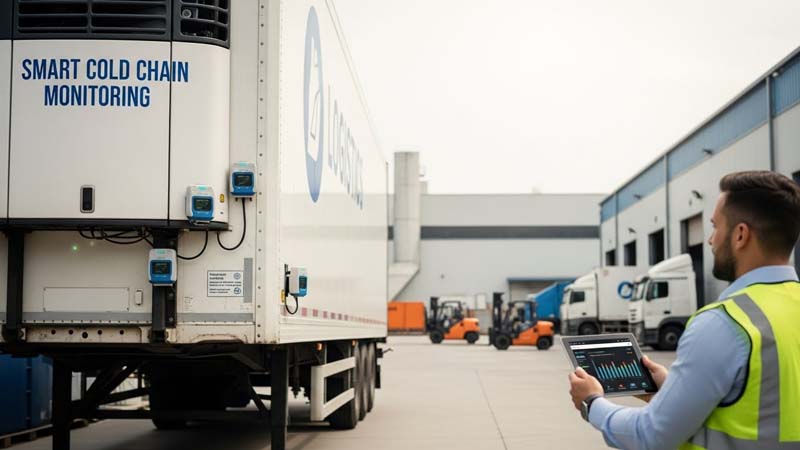
Within this evolving landscape, companies such as EELINK Communication reflect the practical direction of the IoT Industry. With more than 20 years of experience in IoT hardware and software development, EELINK Communication applies wireless communication technologies to real operational needs, including asset management, vehicle security, cold chain logistics, and remote environmental monitoring.
By focusing on reliability, efficiency, and customer value, EELINK Communication supports the steady progression of the IoT Industry toward deep intelligence.
- Contact EELINK
 Globalsales@eelink.com.cn
 tan3051_1
 +86 18218746415
- NEWSLETTER
- Getting the latest GPS devices news From Eelink.
- SUBSCRIBE