 USD $
USD $ EUR €
EUR € HKD HK$





Satellite IoT: Enabling Truly Borderless Connectivity for a Smarter World
Satellite IoT is rapidly becoming a core pillar of global digital infrastructure. As traditional cellular and wired networks reach their physical and economic limits, the need for reliable connectivity in remote and hard-to-reach areas continues to grow. Therefore, Satellite IoT is evolving from a complementary option into a strategic foundation for large-scale digital transformation across multiple industries.
The Limits of Terrestrial Networks and the Rise of Satellite IoT
For many years, IoT development relied mainly on ground-based networks. However, regions such as oceans, mountains, deserts, and high-altitude areas remain difficult to cover. As a result, large connectivity gaps still exist. Ironically, these locations often play critical roles in energy production, logistics, environmental monitoring, and emergency response.
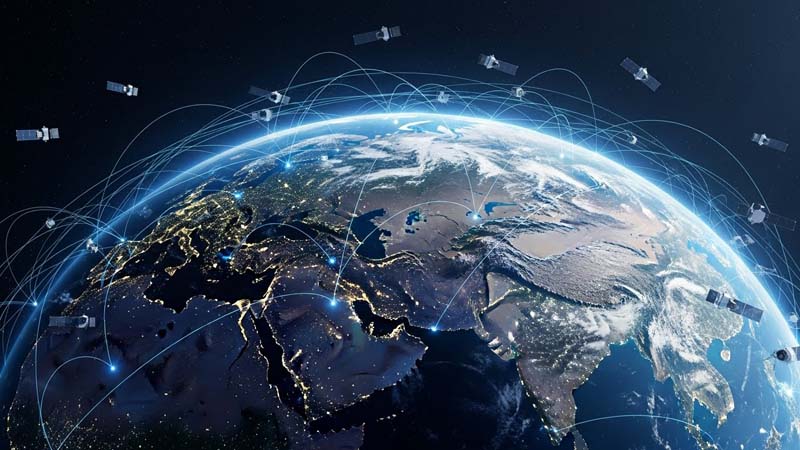
Satellite IoT addresses this challenge by extending connectivity beyond terrestrial boundaries. Instead of depending on base stations, it uses space-based networks to deliver wide-area coverage. Consequently, devices can stay connected even where traditional networks fail. Moreover, the rapid deployment of low Earth orbit satellites has reduced latency while increasing network availability.
How Low Earth Orbit Technology Strengthens Satellite IoT
From a technical standpoint, Satellite IoT typically includes three layers: the space segment, the ground segment, and the device segment. In recent years, low Earth orbit satellites have become the preferred choice. This is because they offer lower latency, higher capacity, and faster handovers.
At the same time, advances in narrowband protocols and low-power communication designs have reshaped device connectivity. As a result, Satellite IoT no longer depends on specialized terminals. Instead, standard IoT devices can now connect directly to satellites.
More importantly, satellite direct-to-device technology lowers deployment complexity. Therefore, Satellite IoT can scale more easily and support long-term operations in remote environments.
Beyond Connectivity: Expanding Data Awareness with Satellite IoT
Connectivity alone does not define IoT value. Instead, continuous and reliable data collection plays a critical role. In the past, many remote devices uploaded data intermittently or remained offline. However, Satellite IoT enables persistent data transmission, even without human intervention.
As a result, organizations can collect complete and consistent data sets. These include location data, device status, environmental conditions, and movement patterns. Moreover, better data continuity improves analytics accuracy. Therefore, companies can shift from experience-based decisions to data-driven strategies.
Key Industry Applications of Satellite IoT
Maritime and Remote Logistics
Satellite IoT supports real-time vessel monitoring, container tracking, and cold-chain visibility. Consequently, logistics operators can improve safety, reduce losses, and optimize routes.
Energy and Infrastructure Monitoring
In energy and infrastructure sectors, equipment often operates in harsh environments. Satellite IoT enables continuous monitoring, which reduces manual inspections and lowers operational risk.
Emergency Management and Public Safety
When disasters disrupt ground networks, Satellite IoT provides a reliable communication channel. As a result, authorities can assess situations faster and coordinate rescue efforts more effectively.
Agriculture and Environmental Monitoring
Satellite IoT enables wide-area environmental sensing. Therefore, it supports precision agriculture, ecological protection, and long-term climate observation.
Industry Impact: How Satellite IoT Is Reshaping the IoT Ecosystem
As Satellite IoT matures, industry boundaries continue to blur. Communications, aerospace, sensing technologies, and data platforms now converge faster than ever. Meanwhile, business models are shifting from pure connectivity services toward value-based solutions.
In addition, Satellite IoT encourages unified network architectures. Instead of separating ground and space networks, future IoT systems will operate as integrated ecosystems. Consequently, connectivity becomes always available, regardless of location.
The Future of Satellite IoT: From Borderless Connectivity to Intelligent Networks
Looking ahead, Satellite IoT will increasingly integrate with artificial intelligence and edge computing. As a result, data will be analyzed closer to the source, not only transmitted. Devices will gain more autonomy, and systems will respond faster to changing conditions.
Therefore, Satellite IoT will evolve from a connectivity solution into an intelligent infrastructure layer. This shift represents a major step toward fully autonomous and globally connected systems.
As Satellite IoT continues to expand, technology-driven companies play a vital role in turning vision into reality. EELINK Communication is one such company dedicated to applying wireless communication technologies to IoT. With over 20 years of experience in IoT hardware and software development, EELINK Communication delivers reliable solutions for asset tracking, vehicle security, cold-chain logistics, and remote temperature and humidity monitoring.
By focusing on innovation and real customer needs, EELINK Communication provides efficient and scalable IoT solutions. Ultimately, as Satellite IoT removes connectivity barriers and enables continuous data flow, it lays the foundation for a smarter, safer, and truly connected world.
- Contact EELINK
 Globalsales@eelink.com.cn
 tan3051_1
 +86 18218746415
- NEWSLETTER
- Getting the latest GPS devices news From Eelink.
- SUBSCRIBE