 USD $
USD $ EUR €
EUR € HKD HK$


IoT Development: Entering a New Era of Integrated “Connectivity, Sensing, Intelligence, and Value”
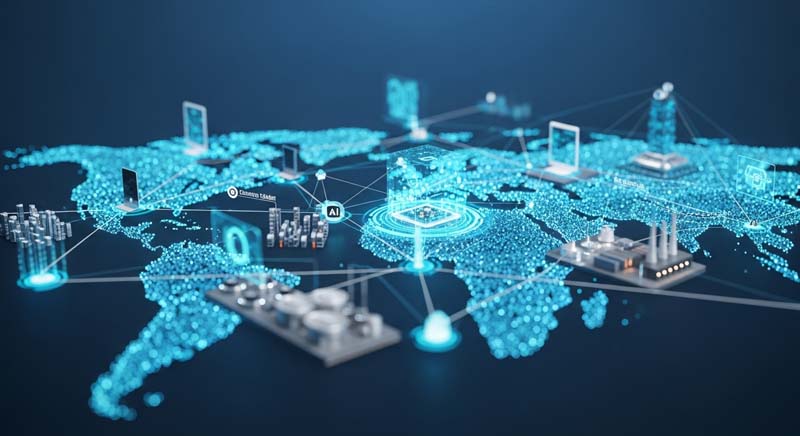
IoT Development is undergoing a fundamental transformation. It is no longer limited to simple device connectivity or basic data collection. Instead, it is rapidly evolving toward a new stage defined by integrated connectivity, advanced sensing, intelligent decision-making, and measurable business value. This shift marks the arrival of a new era often described as “Connectivity–Sensing–Intelligence–Value” integration.
As industries accelerate digital transformation, IoT Development is becoming a core driver of operational efficiency, system intelligence, and sustainable growth. Therefore, understanding this transition is essential for enterprises seeking long-term competitiveness.
From “Connecting Things” to “Coordinating Systems”
In its early stages, IoT Development focused primarily on connecting physical devices to networks. Sensors, gateways, and communication modules enabled data to flow from the physical world into digital platforms. At that time, success was measured by the number of connected devices.
However, as IoT deployments expanded, several limitations became clear. Data silos increased, system integration became complex, and value extraction remained limited. As a result, simple connectivity no longer met real industrial needs.
Today, IoT Development emphasizes system-level coordination. Enterprises now require real-time perception, intelligent analysis, and closed-loop execution. Consequently, IoT is shifting from a technical infrastructure to a strategic capability.
Understanding the Core of Integrated IoT Development
Connectivity: Building a Strong Digital Foundation
Connectivity remains the foundation of IoT Development. Yet its role has changed significantly. With the evolution from 4G and traditional LPWAN to 5G-Advanced, networks now support massive connections, ultra-low latency, and high reliability.
Therefore, connectivity is no longer just a data pipeline. Instead, it acts as the nervous system of intelligent IoT architectures. It enables large-scale device coordination and supports real-time interaction across complex environments.
Sensing: From Data Collection to Environmental Awareness
Sensing is another critical pillar of modern IoT Development. Traditionally, sensors focused on basic measurements such as temperature or humidity. Now, sensing capabilities have expanded to include precise positioning, state recognition, and environmental awareness.
Moreover, the integration of communication and sensing allows networks themselves to perceive physical space. As a result, IoT systems can understand not only “what happened” but also “where and how it happened.”
Intelligence: Turning Data into Decisions
Intelligence defines the real breakthrough in IoT Development. Artificial intelligence now plays a central role in transforming raw data into actionable insights. Instead of relying on static rules, IoT platforms increasingly adopt data-driven models.
In addition, the collaboration between edge intelligence and cloud intelligence enables faster responses and better scalability. Consequently, IoT systems can predict risks, optimize workflows, and support autonomous decision-making.
Value: The Ultimate Measure of IoT Success
Technology alone does not define success. Ultimately, IoT Development must deliver measurable value. This value usually appears in three forms: cost reduction, efficiency improvement, and business innovation.
Therefore, modern IoT solutions focus on integration with real business processes. When IoT directly improves inventory turnover, reduces manual labor, or enhances risk control, it becomes a sustainable investment rather than a technical experiment.02
Why Integrated IoT Development Is Inevitable
Several forces are driving this transformation. First, industrial environments are becoming more complex. Single technologies cannot solve multi-dimensional problems. Second, industries demand real-time visibility and control. Third, enabling technologies are maturing simultaneously.
As a result, IoT Development naturally evolves toward integration. Connectivity enables sensing, sensing feeds intelligence, and intelligence generates value. Without this closed loop, IoT systems remain incomplete.
Practical Example: 5G-Advanced Passive IoT in Action
A strong example of integrated IoT Development is the emergence of 5G-Advanced passive IoT solutions. These systems connect massive numbers of low-cost passive tags through advanced wireless networks.
First, large-scale connectivity enables seamless asset access. Next, precise positioning provides real-time awareness of asset locations and movement. Then, AI analyzes supply chain data to identify patterns and anomalies. Finally, enterprises gain measurable value through lower operational costs and improved transparency.
Therefore, this model clearly demonstrates how integrated IoT Development transforms technology into business outcomes.
Impact on Industry and Business Models
Integrated IoT Development is reshaping both technology architectures and commercial strategies. Technically, systems are moving from fragmented layers to unified platforms. From a business perspective, companies are shifting from selling hardware to delivering ongoing services and solutions.
Moreover, data becomes a long-term asset rather than a byproduct. Industries such as logistics, energy, manufacturing, and cold-chain management increasingly rely on IoT as a core operational engine.
The Future of Value-Driven IoT Development
Looking ahead, IoT Development will continue to deepen its integration. Networks will become more perceptive, algorithms more adaptive, and systems more autonomous. At the same time, industry scenarios will become the main battlefield for innovation.
Enterprises that combine technological depth with real-world understanding will lead this transformation. Consequently, IoT will evolve from digital infrastructure into a true value-creation engine.
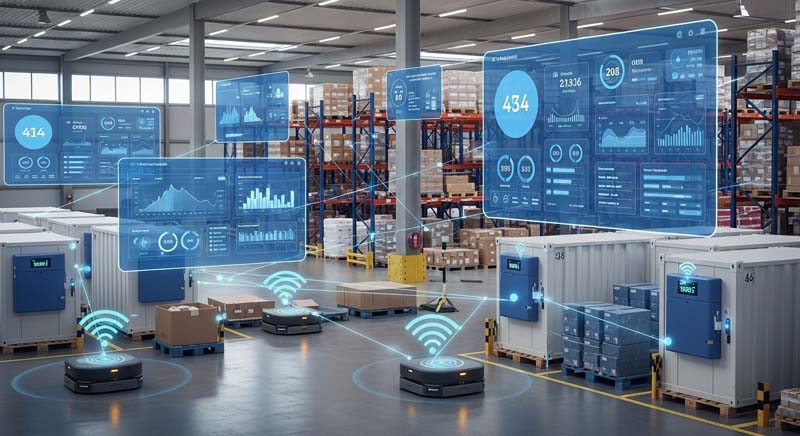
From connecting devices to empowering industries, IoT Development has entered a new era defined by integration and value. Connectivity, sensing, and intelligence no longer exist in isolation. Instead, they work together to generate tangible business outcomes.
Within this evolving ecosystem, experienced technology providers play an essential role. EELINK Communications is one such company. With more than 20 years of experience in IoT hardware and software development, EELINK Communications focuses on applying wireless communication technologies to real-world scenarios. Its solutions support remote monitoring, asset management, vehicle security, insurance services, and cold-chain logistics. By continuously innovating and addressing customer needs, EELINK Communications contributes to the practical realization of IoT value across industries.
- Contact EELINK
 Globalsales@eelink.com.cn
 tan3051_1
 +86 18218746415
- NEWSLETTER
- Getting the latest GPS devices news From Eelink.
- SUBSCRIBE