 USD $
USD $ EUR €
EUR € HKD HK$


The IoT Perception Layer: Invisible Power, Source of Intelligence
The Hidden Foundation of the Smart Era
The Internet of Things (IoT) transforms our world. It connects physical and digital realms. At its core lies the perception layer. This layer acts as IoT’s “senses.” It captures data silently yet powerfully. Like a spark, it ignites the smart era. It’s invisible but vital. This article explores the perception layer’s definition, role, applications, and trends. Let’s uncover its hidden power.
1. Defining the Perception Layer: The Start of Intelligence
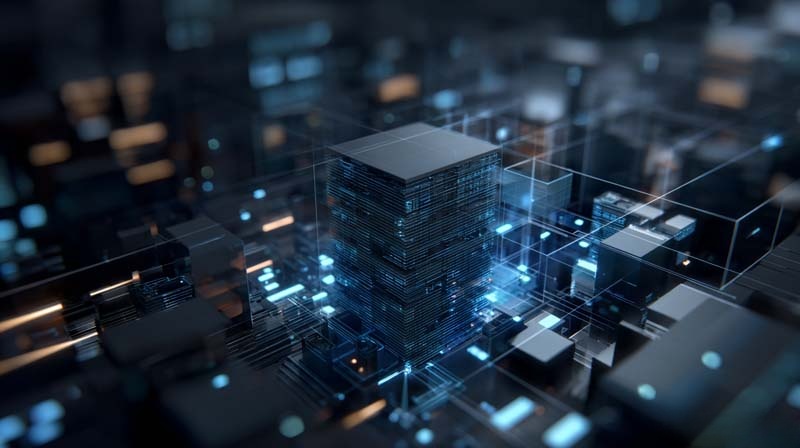
The perception layer is IoT’s foundation. It collects data from the physical world. Sensors, RFID, and chips drive it. These tools sense temperature, humidity, or motion. They bridge reality and digital systems. Moreover, they enable smart decisions.
Recent advances strengthen this layer. Ultra-thin sensors now fit in wearable devices. For instance, China’s breakthroughs create tiny, low-power sensors. These reduce energy use by 30%. Additionally, low-power wide-area networks (LPWAN), like NB-IoT, enable long-range data collection. In 2024, China’s sensor market hit $43 billion, growing 15% yearly. Edge computing further boosts efficiency. It processes data locally, easing cloud burdens. Thus, the perception layer fuels IoT’s growth.
2. Core Role: Bridging Physical and Digital Worlds
The perception layer powers IoT. It gathers critical data. This data drives decisions and automation. Without it, IoT stalls. For example, smart home sensors monitor temperature. They adjust lights automatically, saving 20% energy. In industry, sensors detect equipment issues early. This cuts downtime significantly.
Furthermore, the perception layer shapes industries. It supports chip design, device production, and data analysis. It creates billion-dollar markets. Though often unseen, its impact is vast. Smart homes, factories, and cities rely on it. Indeed, it connects IoT’s entire ecosystem. Its invisible strength sparks intelligence.
3. Applications: Empowering Diverse Industries
The perception layer shines in many fields. In smart homes, it thrives. Sensors control lights and locks effortlessly. For instance, Xiaomi’s IoT platform enhances user comfort. It saves energy too. Meanwhile, industrial IoT uses sensors for efficiency. China Mobile’s 5G project in Tianjin monitors ports. This boosts cargo handling by 30%.
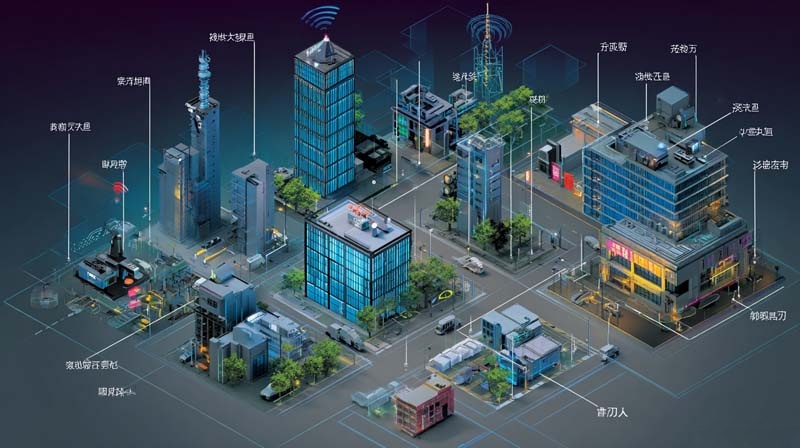
Moreover, smart cities depend on this layer. Suzhou leads in autonomous driving. Its sensors ensure split-second responses. In healthcare, wearables track heart rates. They enable remote care. Globally, the smart medical device market hit $50 billion in 2023. China’s IoT connections reached 3 billion in 2024. Thus, the perception layer drives progress worldwide.
4. Challenges and Future Trends: Toward a Smarter Tomorrow
The perception layer faces hurdles. High power use limits deployment. Costs remain a barrier in remote areas. Additionally, data security needs improvement. Privacy risks worry users. Also, inconsistent standards slow growth. Compatibility issues persist across devices.
However, the future looks bright. First, AI integration enhances data analysis. For example, Alibaba’s quantum simulator speeds up processing. Second, low-power and green tech gain traction. LPWAN and energy harvesting cut costs. Third, China’s chip advancements boost global influence. To thrive, industries must innovate. They should standardize systems and collaborate globally. These steps ensure a robust future.

Invisible Power, Bright Future
The perception layer is IoT’s heartbeat. It captures the world’s pulse. Though hidden, it powers smart homes, industries, and cities. It fuels efficiency and innovation. Looking ahead, AI and green tech will amplify its role. The perception layer is the source of intelligence. It shapes a smarter world. Let’s harness its invisible power to build a brilliant future.
- Contact EELINK
 Globalsales@eelink.com.cn
 tan3051_1
 +86 18218746415
- NEWSLETTER
- Getting the latest GPS devices news From Eelink.
- SUBSCRIBE