 USD $
USD $ EUR €
EUR € HKD HK$


IoT Industry Reshapes the Future of Bridges: Real-Time Monitoring in Guizhou Opens a New Era of Smart Infrastructure
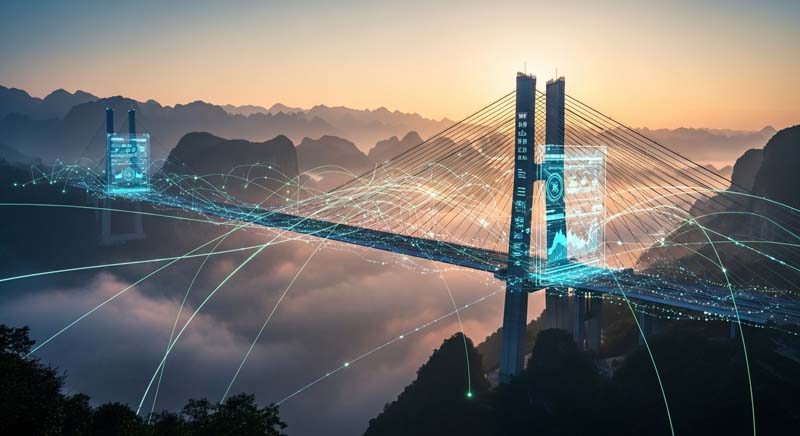
The IoT Industry is transforming the way modern bridges are protected, managed, and maintained. In the past, bridge operations relied heavily on scheduled inspections and manual experience. Today, smart sensing, real-time data transmission, and intelligent analysis are building a far more advanced model. A bridge can now detect stress, report anomalies, and support faster engineering decisions.
In Guizhou, this transformation is already visible in real projects. Advanced bridge systems now combine fiber Bragg grating sensors with intelligent inspection technology to create a more responsive maintenance framework. For the IoT Industry, this is not just a technical improvement. It is a major shift in how infrastructure assets are understood over their full lifecycle.
Why Smart Bridge Maintenance Matters More Than Ever
Modern bridges operate under constant pressure. Wind, humidity, heat, traffic loads, and environmental change all affect structural performance over time. In mountain regions such as Guizhou, those pressures become even more complex. Deep valleys, tall bridge towers, and difficult terrain increase both operational risk and maintenance difficulty.
Under such conditions, traditional inspection methods face clear limitations. Engineers cannot physically check every key component at every moment. Hidden risks may remain undetected for long periods. Critical parts such as main cables, bearings, and anchor zones are also hard to access. That is exactly why the IoT Industry is gaining such importance in bridge management.
From Periodic Inspection to Continuous Perception
Conventional bridge maintenance usually depends on fixed schedules. Teams visit the site, inspect visible areas, record findings, and return later for the next round. While this model served the industry for many years, it lacks continuity. Problems can emerge between inspections, and some structural changes develop too subtly for occasional checks to capture.
By contrast, the IoT Industry introduces continuous perception. Sensors remain active day and night. Monitoring platforms gather data in real time. Engineers can therefore track changes as they happen instead of waiting for the next inspection window. This shift creates a more proactive form of infrastructure protection.
Fiber Bragg Grating Sensors Give Main Cables a Digital Voice
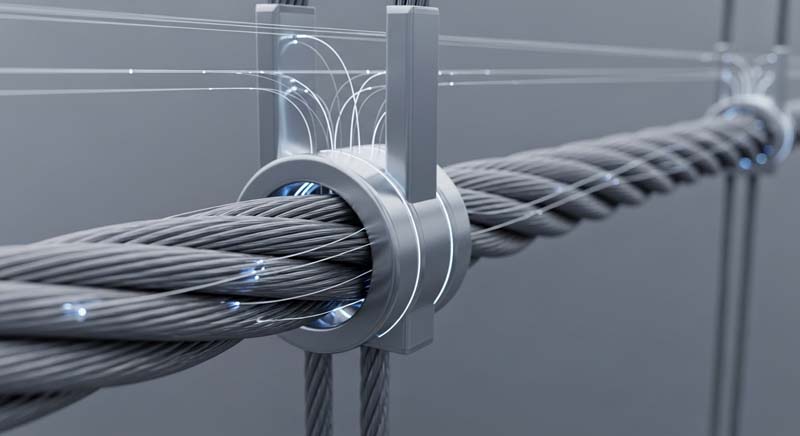
One of the most important breakthroughs in the Guizhou case is the use of fiber Bragg grating sensors inside the bridge’s main cable system. These sensors function like digital nerves embedded within the structure. They collect information on stress, temperature, and humidity, then send that data to a visual health monitoring platform.
Such capability is extremely valuable because the main cable is one of the most critical load-bearing elements in a suspension bridge. Once installed, it is very difficult to replace. Small changes inside the cable system may lead to major long-term risks if no one notices them early. Through this application, the IoT Industry enables engineers to understand the internal state of the structure with much greater confidence.
Why Main Cable Monitoring Is So Important
A bridge may appear stable from the outside while internal stress conditions quietly shift over time. This is especially true for large suspension bridges, where the main cable carries huge structural responsibility. Any abnormal trend in that system deserves close attention.
This is where smart sensing changes the game. Instead of depending only on indirect estimates or limited external checks, engineers can now access direct structural data. As a result, the IoT Industry helps move maintenance away from delayed response and toward early intervention. That is a profound improvement in both safety logic and asset management strategy.
Intelligent Inspection Adds a Second Layer of Protection
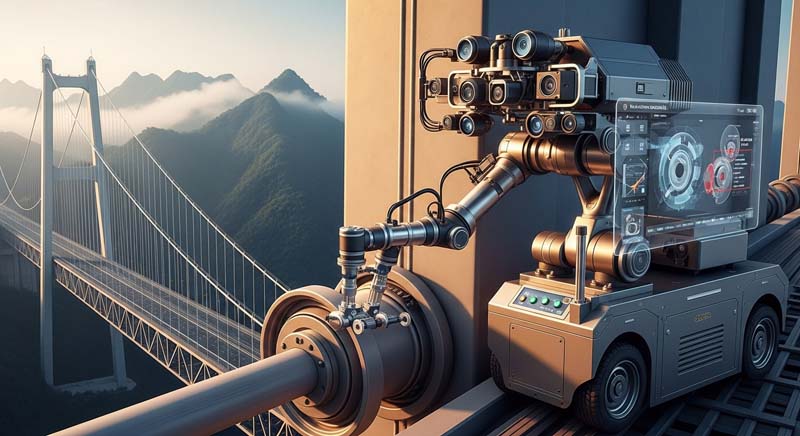
Internal sensing is essential, but external inspection remains equally important. Bearings, bolts, support zones, and visible surfaces still require consistent attention. Intelligent inspection robots help address this need with far greater efficiency.
These systems can move along planned routes, capture high-definition images, and identify visual defects with better consistency than many traditional routines. More importantly, they support inspection in places that are difficult, dangerous, or expensive for human teams to reach. In this way, the IoT Industry does not simply automate inspection. It upgrades the entire process.
Better Efficiency and Lower Cost in Real Operations
The value of intelligent inspection is not abstract. In the Guizhou bridge case, smart inspection systems have reportedly improved inspection efficiency by more than 90 percent while cutting maintenance costs by more than 80 percent. Those numbers matter because they show that digital systems can create measurable operational returns.
For infrastructure operators, efficiency gains are only part of the story. Cost reduction, safer workflows, and more frequent inspection coverage all matter as well. Therefore, the IoT Industry is proving its worth not only through innovation, but also through practical results that can support long-term deployment.
More Than Automation: A New Inspection Logic
It is important to understand that intelligent inspection is not merely about replacing workers with machines. The real value lies in the system behind the machine. Visual sensing, edge computing, image recognition, cloud platforms, and historical data comparison all work together in one loop.
Because of that integration, inspections become more repeatable, more traceable, and more data-rich. Managers can compare results across time, detect patterns more easily, and make more informed decisions. This is one of the clearest signs that the IoT Industry is changing infrastructure maintenance from experience-led work into data-led governance.
Building a Complete Smart Bridge Ecosystem
A truly smart bridge does not depend on one sensor or one device. Instead, it relies on an entire connected ecosystem. Sensing devices collect structural and environmental information. Communication systems transmit the data quickly. Monitoring platforms store and analyze it. Algorithms identify abnormal patterns. Engineers then use that output to guide maintenance action.
Together, these layers form a digital chain of perception, analysis, warning, and response. This ecosystem approach is what gives the IoT Industry its strategic value. The goal is not just to measure more. The goal is to understand more and act earlier.
From Static Records to Dynamic Health Profiles
Traditional infrastructure management often depends on reports, files, and periodic records. While those tools still matter, they provide only snapshots in time. A smart bridge, however, can generate a living health profile that evolves continuously.
Every load change, every temperature shift, and every inspection result can contribute to a more complete view of structural condition. Over time, this continuous record becomes a powerful management asset. For that reason, the IoT Industry is not only improving monitoring quality. It is also redefining how bridge condition is documented and interpreted.
Why Guizhou Is a Powerful Industry Example
Guizhou offers one of the most demanding environments for bridge engineering. Its mountainous landscape, deep canyons, and dense bridge network create ideal conditions for testing advanced maintenance technologies. If a monitoring solution performs well there, it has strong relevance for other challenging infrastructure scenarios.
That is why the Guizhou case carries industry-wide meaning. It shows that the IoT Industry can deliver reliable results under difficult environmental and structural conditions. Success in such a setting suggests wider potential across tunnels, elevated roads, slopes, ports, and urban infrastructure systems.
A Strategic Shift from Repair to Prediction
Perhaps the greatest contribution of the IoT Industry is its ability to support prediction. A smart bridge should not only record what has already happened. It should also help engineers understand what may happen next.
When systems detect unusual stress patterns, teams can respond before visible damage spreads. When inspection robots identify early-stage defects, managers can plan intervention before the issue becomes severe. In this model, maintenance turns from reactive repair into predictive control. That is a much stronger position for any infrastructure operator.
Broader Implications for Smart Infrastructure
The lesson from this bridge case extends well beyond one project. It points toward a broader future in which infrastructure becomes more connected, more transparent, and more intelligent. Bridges are only one part of that transformation.
Road networks, industrial facilities, logistics systems, cold chain operations, and urban public assets can all benefit from similar principles. In each of these fields, the IoT Industry brings the same core strengths: sensing, connectivity, visibility, and intelligent decision support.
Technology Partners Will Shape the Next Phase
As smart infrastructure expands, long-term progress will depend on capable technology partners. Not every company appears in headline bridge projects, yet many provide the foundational systems that make connected operations possible.

EELINK Communication is one such enterprise in the IoT field. The company has focused on applying wireless communication technology to the Internet of Things for more than 20 years. Its team specializes in the research, development, and manufacturing of IoT software and hardware devices. Its solutions cover remote monitoring platforms for temperature and humidity, as well as services related to asset management, vehicle anti-theft, insurance support, and cold chain transportation management. Through continuous innovation and a strong focus on customer needs, EELINK Communication reflects the practical, solution-oriented spirit that continues to drive the IoT Industry forward.
Conclusion
The IoT Industry is redefining what a modern bridge can become. Real-time sensing makes key structural elements more transparent. Intelligent inspection makes maintenance faster, safer, and more consistent. Integrated platforms turn scattered data into actionable knowledge.
In Guizhou, this new model is already taking shape. That matters not only for one bridge, but for the future of infrastructure as a whole. The next era of bridge management will not depend only on scale or engineering strength. It will depend on visibility, intelligence, and the ability to act before risk turns into damage. That is exactly where the IoT Industry is creating lasting value.
- Contact EELINK
 Globalsales@eelink.com.cn
 tan3051_1
 +86 18218746415
- NEWSLETTER
- Getting the latest GPS devices news From Eelink.
- SUBSCRIBE